BIN-06 Class Blog

Pronunciation Chat Box

Showing posts with label Week 5. Show all posts

Week 5: Listening Exercise / Tech talk at the NY Times

Sunday, October 16, 2011


Tech Talk at the NY Times

You will listen to a segment of a Tech Talk report by New York Times reporters J. D. Biersdorfer and Pedro Rafael Rosado.  Below you are provided with a set of questions, so please give a brief but direct answer to each of them. Don’t forget to print a copy of this exercise and bring it to class to be checked.


1
What’s the main objective of the social media available?
A/
2
Why is it that Google + is not as popular as Facebook?
A/
3
Was Google + open to anyone that wanted to join at the beginning?
A/
4
What seems to be the reason that Google + traffic dropped by 60% according to advertising networks and research firms?
A/
5
Why was the metaphor better than sliced bread used when describing Google +? What does it mean?
A/
6
What’s the explanation regarding Google +’s sudden increase and rapid decrease in popularity?
A/
7
What are the two theories about why Google + is lagging in the social media?
A/ a)
    b)
8
What’s the male reporter’s bottom line about Google + and the lack of the “fun factor” or “sticky quality?”
A/
9
Compared to Facebook, how user-friendly is Google +?
A/
10
What’s the new relationship between Facebook and iPad?
A/
11
What are the most important features of the new Facebook app?
A/

12

TRANSCRIPTIONS:
a)   connected /kǝ’nɛktɪd/
b)  Google Plus
c)   apparently
d)  increase
e)   temporary
f)    theories
g)  supply
h)  stand out
i)     features
j)    sticky quality
k)   the bottom line
l)     complicated


Taken and adapted for educational purposes only, from NYTimes.com Podcasts at http://www.nytimes.com/pages/podcasts/index.html


Take a look at the exercise right here.
Get a copy of the exercise here.


And what about the answers?

Week 5: Contrastive Words Practice

Wednesday, February 9, 2011


Consonant Contrasts

The following chart contains words with fricative sounds. Read each word carefully and producing each sound according to its internal features.


List 1: /f/ vs. /v/

fan

van

ferry

very

fault

vault

few

view

rifle

rival

safer

saver

half

have

leaf

leave


List 2: /t/ vs. /ϴ/

taught

thought

team

theme

tree

three

true

through

tent

tenth

debt

death

boot

booth

mat

math


List 3: /s/ vs. /z/

sink

zinc

sip

zip

deceased

diseased

racing

raising

niece

knees

ice

eyes

place

plays

price

prize


List 4: /s/ vs. /ʃ/

sip

ship

sew

show

classes

clashes

class

clash

bass

bash

Rus

rush


Week 5: The Fricative Sounds


The Fricative Sounds

Fricatives in English are the most important group of consonants since we have 9 members in this group. These consonant phonemes are characterized by the friction they produce when the airstream is coming out of the mouth. It is the tongue and its several positions the one responsible in the production of all these sounds.

How can fricatives be described or defined? They are consonants produced by forcing the breath stream through a constriction by articulators in the vocal tract.

Fricatives are divided into 5 different sub-categories:

1. labiodental fricatives,

2. interdental fricatives,

3. alveolar fricatives,

4. palatal fricatives, and

5. a glottal fricative.

As can be noticed in the chart below, we have sister sounds, except for the glottal phoneme, which happens to be by itself.

This chart can also help us see the similarities and differences across the two languages we get to use at the university.

Phoneme

Spanish

English

/f/

voiceless-labiodental

voiceless-labiodental

/v/

(It doesn’t exist.)

voiced-labiodental

/ϴ/

(It doesn’t exist.)

voiceless-interdental

/ð/

(It is an allophone.)

voiced-interdental

/s/

voiceless-alveolar

voiceless-alveolar

/z/

(It doesn’t exist.)

voiced-alveolar

/ʃ/

(It doesn’t exist.)

voiceless-palatal

/ʒ/

(It doesn’t exist.)

voiced-palatal

/h/

voiceless-glottal

voiceless-glottal


As you may have noticed five of the fricative phonemes in English do not exist in Spanish spoken in the Americas. The other one exists in Spanish, but it is an allophonic difference for another phoneme.


Week 5: Transcription by Thematic Units 5

Thursday, December 23, 2010

Transcriptions by Thematic Units 5:

Fruits

Guava


The following exercise requires that you listen to the following words and transcribe them in class. Listen to the words on the Google translation service at http://translate.google.co.cr/#. Then transcribe each of the words or phrases.

Passion Fruit

Fruit

Transcription

apple

/’æpǝl/

orange

starfruit

papaya

banana

pineapple

grapes

water melon

peach

cherry

passion fruit

guava


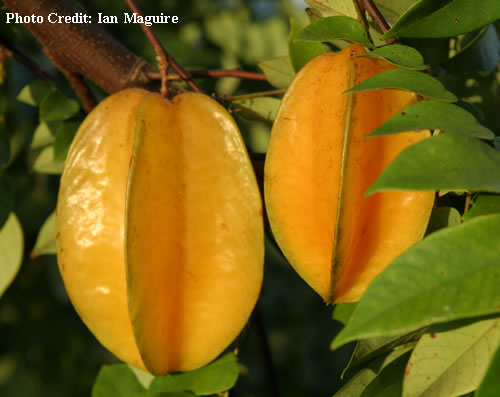
Starfruit

Water Melon


Browse

Announcements